
Why We Hand Spear: A Tradition With Deep Roots
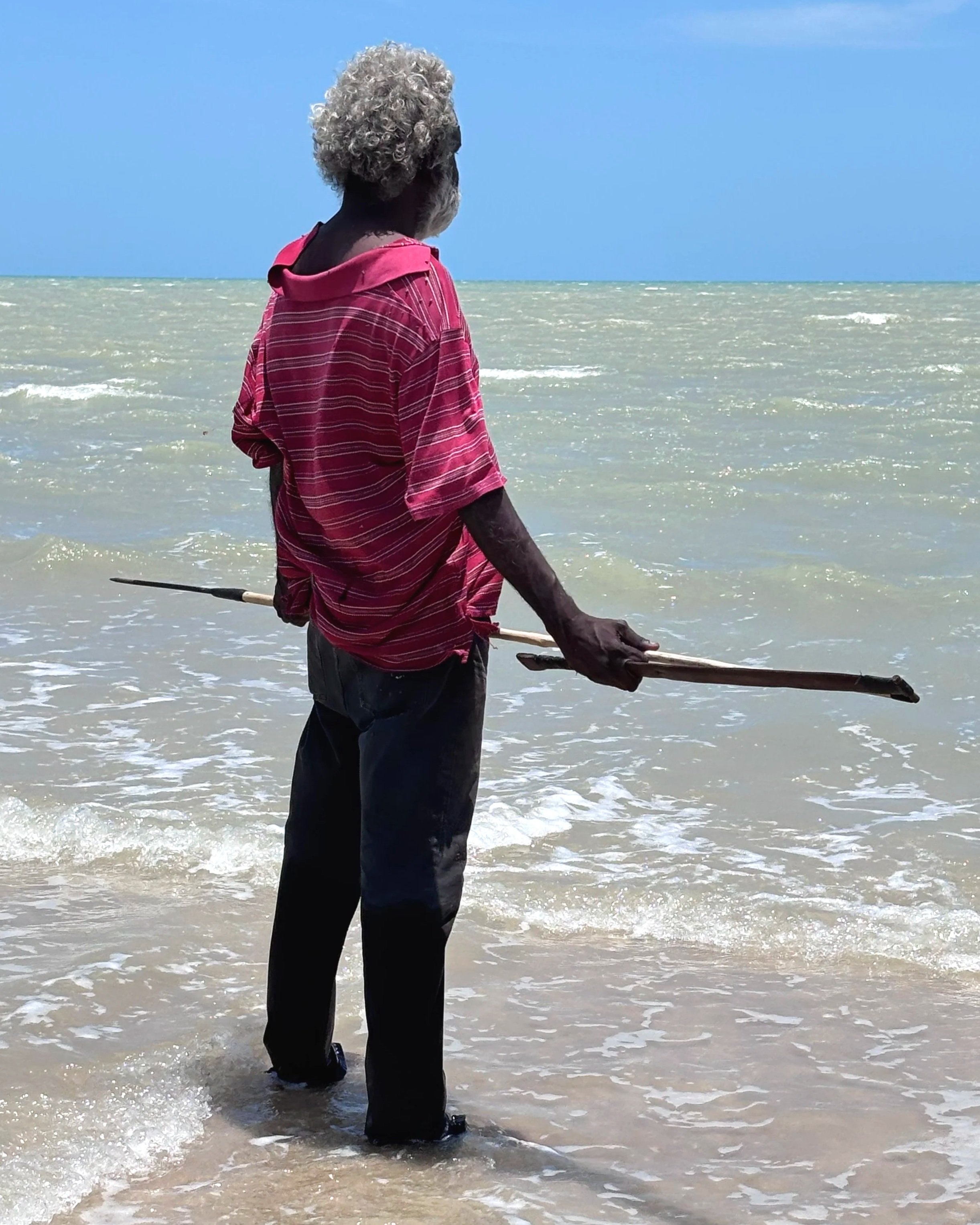
The Roots of Hand Spearing: Where It All Began
Australian Aboriginal peoples have been using hand spears for tens of thousands of years, making it one of the oldest continuous hunting traditions on Earth. These spear-like weapons were crafted for multiple purposes, including fishing, hunting land animals, and even use in combat. Their design varied between regions, but each community developed techniques perfectly adapted to the landscapes, waterways, and wildlife around them.
While spears have been used across many cultures worldwide, the Woomera (often called a spear thrower) is a uniquely Aboriginal innovation. This tool was paired with a spear to extend the thrower’s reach, allowing hunters to generate far greater force, distance, and accuracy. The Woomera acted like an extension of the arm, turning a simple throw into a highly effective long-range strike.
Beyond its role in hunting, the Woomera was a versatile multi-purpose tool. Depending on its design, it could also serve as a knife, digging stick, carving tool, fire-making aid, and even a food preparation item. In many communities, it was an essential everyday tool. The Woomera and spear were practical, adaptable, and ingeniously engineered for survival and success in the Australian environment.
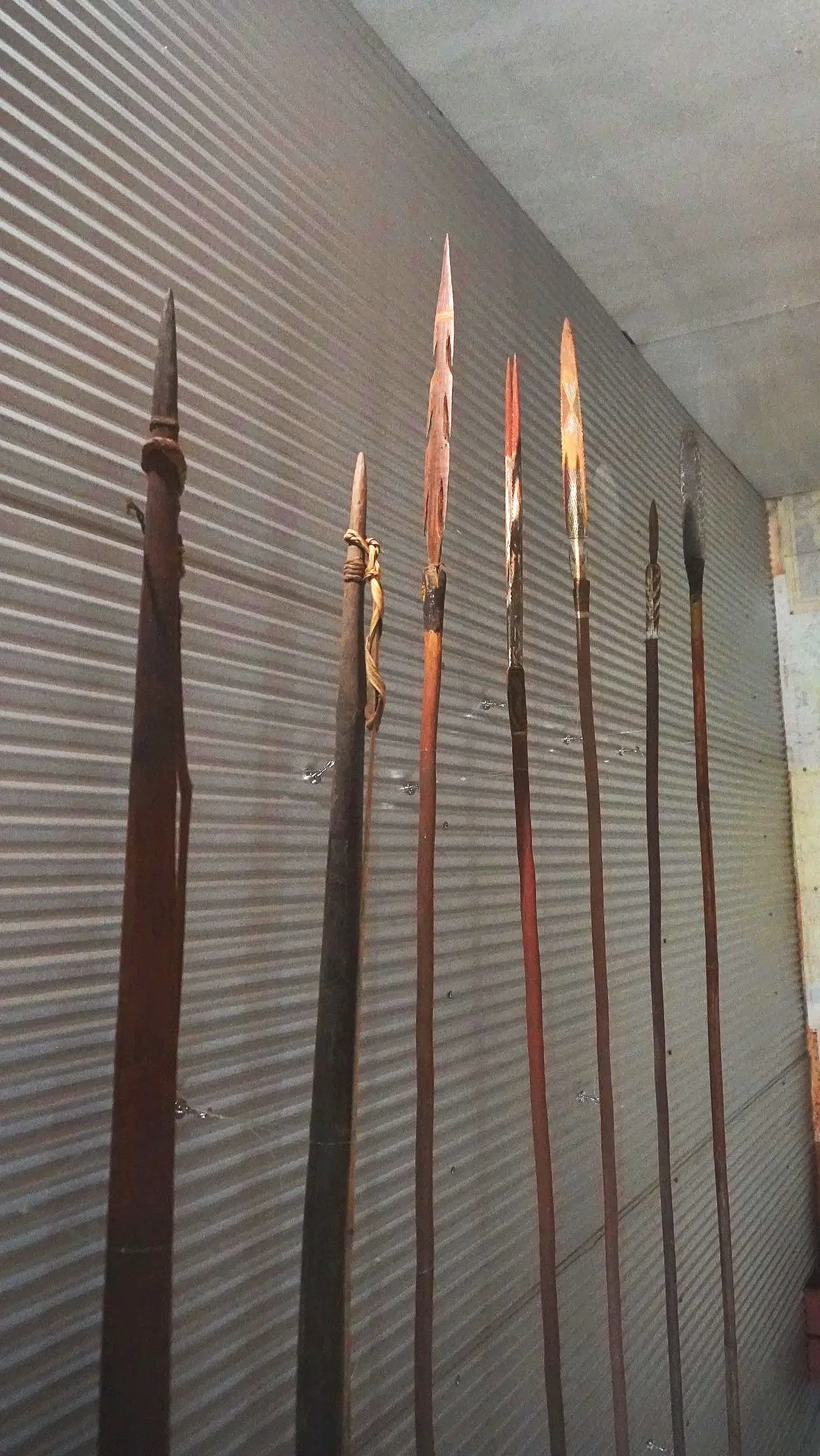
What is a Hand spear and how are they made traditionally ?
A hand spear is essentially a long wooden shaft with a pointed tip fixed to one end. Traditionally, these tools were crafted entirely from natural resources available on Indigenous lands. Because each region offered different materials, the construction of spears varied depending on the environment.
Common woods used included bamboo, young tree saplings, bougainvillea, and reeds. While makers aimed to find naturally straight pieces, slight bends were common. To correct this, the wood was heated over hot coals, allowing it to be carefully bent and straightened before it cooled.
Spearheads were traditionally fashioned from bone (often from kangaroos, birds, or other small mammals) chosen for the strength needed for the spear’s purpose. The shape of the tip also differed, fishing spears were typically lightweight and multi-pronged, whereas heavier, single-pronged spears were preferred for hunting on land.
To attach the spearhead, the end of the shaft was cut to create a socket for the tip. It was then secured with resin, traditionally collected from the roots of particular trees. This resin was melted over a fire until malleable, applied to the spear, and left to cool, forming a strong and waterproof bond.

Why hand spearing matters to us
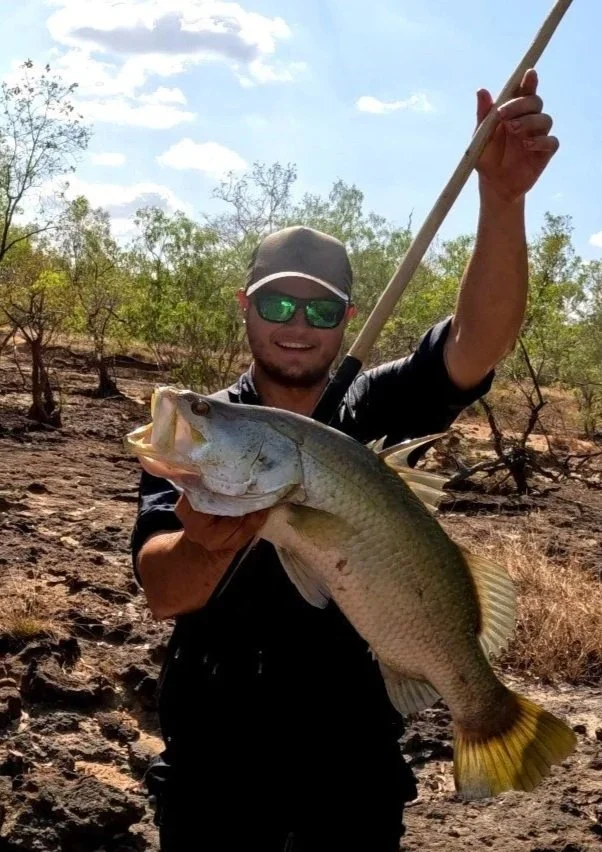
My first introduction to hand spearing began during a trip to Cape York to visit my Aboriginal friends in a remote community. We were fishing for barramundi with rods and lures, and it was incredibly frustrating - casting at fish I could clearly see, only for them to spook the moment the lure hit the water. While I was dealing with snags and bird’s nests in my line, my mate wandered off with his hand spear and returned not long after with a dozen barra stacked along it. I couldn’t believe how effective he was with such a simple tool - no line, no tangles, no mess.
Naturally, I wanted to give it a go. I grabbed a spear and headed out with one of the brothers. After missing a few fish, we eventually spotted a barramundi sitting in the shallows. I took my shot and landed a beautiful barra - an experience that instantly sparked my passion for this fishing method.
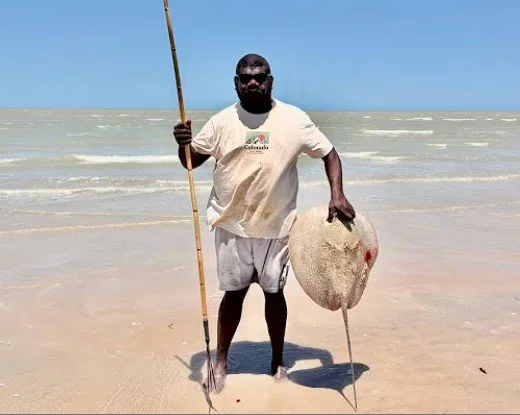
Over many visits to the brothers in Pormpuraaw, they taught me countless tricks and techniques to help master the skill of hand spearing. This knowledge has been passed down through their families for generations, and I’ve been fortunate enough to learn from them.
They didn’t just teach me how to use a spear - they showed me how to make one, blending modern materials with traditional methods. Over the years, my passion for this sustainable and rewarding style of fishing has only grown. Now, I want to share it with others and challenge myself to spear as many different species as possible.
Want to learn more?
I’ve been fortunate to learn so much from the communities I’ve visited, and I’ve tried to capture as much of that knowledge as possible on my YouTube channel. I’ve shared plenty of videos from our hand-spearing adventures, along with a special video where one of the grandfathers teaches me how to make a hand spear. I’ve attached a few of those spear-making videos below - be sure to check them out.
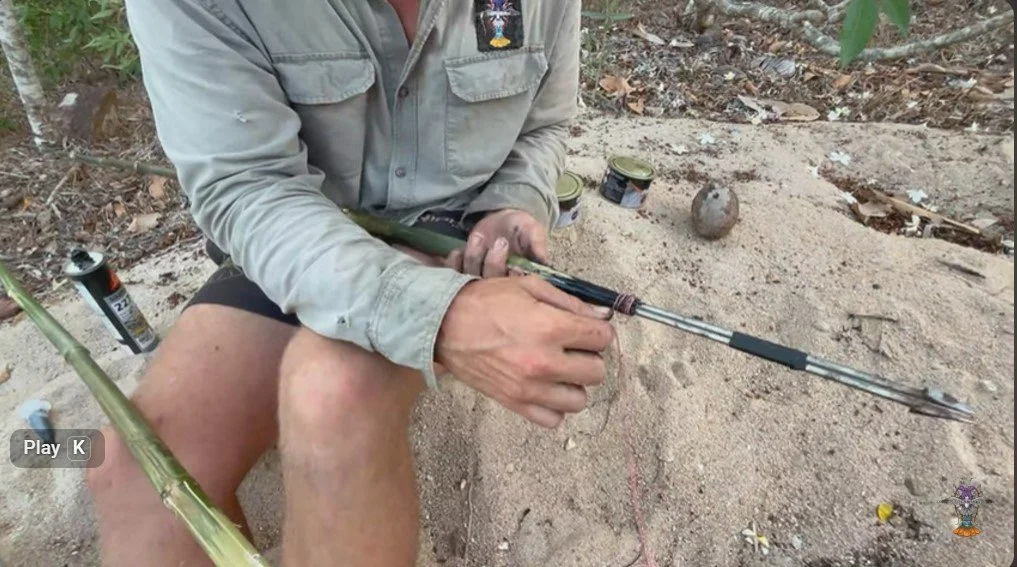
My modified modern version of making a handspear.
Also shows hand spearing and pig hunting in Cape York
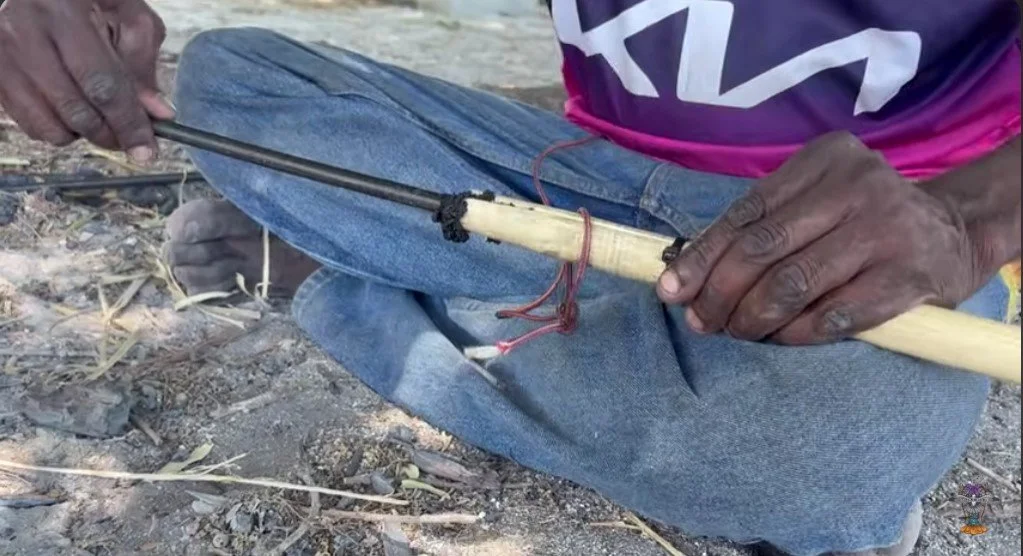
Hand spear making with traditional and modern techniques
Also shows hand spearing and cooking with the locals of Cape York
References -
by koorihistory.com · August 8, 2019 - Spears: Form & Function - https://koorihistory.com/spears/
by Amy Hall - April 24, 2025 - The Spear and The Woomera - https://www.yarn.com.au/blogs/yarn-in-the-community/hunting-spears-and-the-woomera?srsltid=AfmBOoq64m7xCcidTzJh3AaHRukxGATww2MyZYsgO4DMt4DSJAJhC3vZ